

Industrial Law Practice in Pakistan
Industrial law acts as the rulebook for running large-scale businesses. It covers everything from setting up trade unions and managing employee concerns to overseeing workplace safety and cross-border industrial operations. These laws manage the daily interactions between business owners, staff, and the organizations that represent them. By using tools like mediation, arbitration, or formal legal agreements, industrial law helps settle workplace disagreements before they spiral out of control.
The Industrial Relations Act 2012 (IRA) is the primary legislation in this field. It outlines how trade unions form, how “collective bargaining agents” are chosen, and how disputes between management and workers should be resolved fairly.
Applicability & Scope of Work
Pakistan’s economy depends on sectors of industry. A country needs fast industrialization above all else to grow rapidly since it underpins agriculture, transportation, and foreign trade. An expanding manufacturing base generates employment, boosts the national income, and increases everyone’s general quality of living.
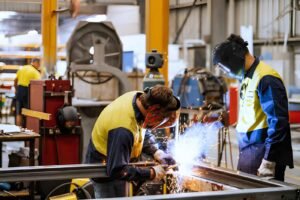
Industrial legislation is crucial for the smooth operation of these firms. Their subjects span employment agreements, environmental preservation, and employee safety. These regulations are customized to satisfy particular business demands and prohibit unethical labor practices since every sector varies. For both managers and employees, they offer a crisp road map of rights and obligations. Additionally, helping to protect our surroundings from industrial damage are these laws.
Businesses operate more effectively when these laws are observed. This results in improved output, more equal earnings, better wages for employees, and a considerable decrease in discrimination or workplace inequality.
Objectives of Industrial Law
The main goal of industrial law is to strengthen the bond between employers and their staff, creating a focused and happy workforce. Here are the key targets:
- To stop the exploitation of the labor force.
- To build a friendly relationship that protects the interests of both sides.
- To ensure workers have access to proper welfare and facilities.
- To prevent human conflicts that could damage the business or the national economy.
- To boost overall production levels.
- To raise the financial status of workers.
- To lower the frequency of strikes and lockouts.
These laws help establish a clear sense of responsibility, ensuring that everyone knows their privileges and their obligations.
Industrial Law Policy in Pakistan
A country’s industrial policy is its official game plan to spark economic growth, usually by focusing on the manufacturing sector. This strategy provides a framework of rules and defines which areas of business belong to the government and which belong to private citizens.
The industrial sector makes up about 20% of Pakistan’s total GDP. Textiles and clothing are our biggest players, accounting for roughly 65% of exported goods and employing 40% of the workforce. Other major sectors include sports and leather goods. Because our industries are our primary exporters, a strong and modern industrial policy is the “need of the hour” to fix and grow our economy.
Industrial Law Practice in Pakistan
Since its birth, Pakistan has created various acts and ordinances to manage industrial life. The Constitution of Pakistan even lists employee rights as a Fundamental Right. Articles 11, 17, 18, 25, and 37 (e) specifically protect workers from harassment and exploitation. These laws aim to improve literacy and social development, showing the government’s push toward national progress.
Sardar Khan & Co has been a leader in Pakistan’s industrial sector since 1975. Our team of experienced lawyers specializes in labor laws and workplace relations. We advise everyone, from individual employees to massive public and corporate organizations on how to handle workplace disputes.
Industrial Labour & Employment Laws in Pakistan
Labor laws in Pakistan are extensive, with some rules dating back decades. They ensure that the service and manufacturing industries function correctly. These laws cover wages, safety, paid leave, and the right to form unions. They also strictly prohibit child labor and workplace harassment.
Key laws include:
- Apprenticeship Ordinance & Rules
- Boilers & Pressure Vessels Ordinance
- Employment of Children Act
- Factories Act and Rules
- Payment of Wages Act & Minimum Wages Rules
- Workmen’s Compensation Act
Industrial Relations Ordinances
The first major industrial relations rule arrived in 1969. Over time, as technology and society changed, new versions were passed in 2002, 2011, and 2012. These rules give workers a bigger voice in company decisions and aim to make labor-management relations more stable. The current 2012 Act is highly balanced and gives people the freedom to start trade unions.
Laws on Industrial Development
Beginning in 1952, the Pakistan Industrial Development Corporation (PIDC) sought to establish companies in places devoid of employment or in need of significant sums of money that private investors couldn’t provide alone.
- 1963 Ordinance of the Provincial Industrial Development Corporation: clarifies how these companies operate regionally.
- Ordinance of 1963 on West Pakistan Industries (Control on Establishment): This guarantees that sectors develop in a structured manner and stops people from erecting enormous businesses unauthorized.
- Under Ordinance 1961, the IDBP was established to offer the financing required to construct plants, especially for small and medium-sized firms.
Small Industries Corporation Laws
In 1972, the Pakistan Small Industries Corporation (PSIC) was formed to help smaller businesses get credit and better technology. This helps create jobs and reduce poverty. The specific provincial laws include:
- The Punjab Small Industries Corporation Bill, 1973
- Sindh Small Industries Corporation Bill, 1973
Laws on Industrial Research
The Pakistan Council of Scientific and Industrial Research (PCSIR) helps factories solve technical problems and reduce waste. They encourage businesses to use local materials and new technology to become more competitive globally. Relevant laws include:
- PCSIR Act, 1973
- Industrial Statistics Act, 1942
Miscellaneous Industrial Statutes
Several specific laws target unique industries, such as the Cotton Ginning and Pressing Factories Act (1925) and the Vegetable Oil Industry Act (1973). These ensure that even specialized sectors follow national standards.
Industrial Business & Trade Laws
Trade laws impact how factories produce goods. Pakistan often places higher taxes on imported items to encourage people to buy locally-made industrial products. This legal umbrella includes:
- Export & Import Control Acts
- Customs Act, 1969
- Anti-Dumping Ordinances (to stop unfair foreign competition)
Applicability of Environmental Laws
The Pakistan Environment Protection Agency sees to it that manufacturers adhere to the Environmental Protection Act, 1997. Businesses have to get rid of hazardous garbage properly. Strict legal repercussions await a plant that pollutes the air or water. Pakistan presently employs a centralised system to guarantee harmful compounds do not affect those living in the vicinity of industrial areas.
Conclusion
Early cooperation with an industrial attorney is a wise decision throughout your entrepreneurial career. It enables you to grasp environmental requirements, development laws, and employment regulations. Making sure from day one that your internal papers and workplace regulations abide by the law helps you to save future costly legal battles.